The Wild Ingleborough Programme was launched in 2021 with a simple yet ambitious goal: to restore a landscape in the Yorkshire Dales from valley bottom to mountain top. Working closely with local communities, the Wild Ingleborough team haven’t only expanded the project area but are also aiding the reconnection of fragmented habitats, giving wildlife room to roam freely in this upland landscape.
What makes this project unique is its collaborative approach. We are working alongside Yorkshire Wildlife Trust, Natural England, WWF, Woodland Trust and University of Leeds, pooling diverse expertise and maximising resources to make a real impact.
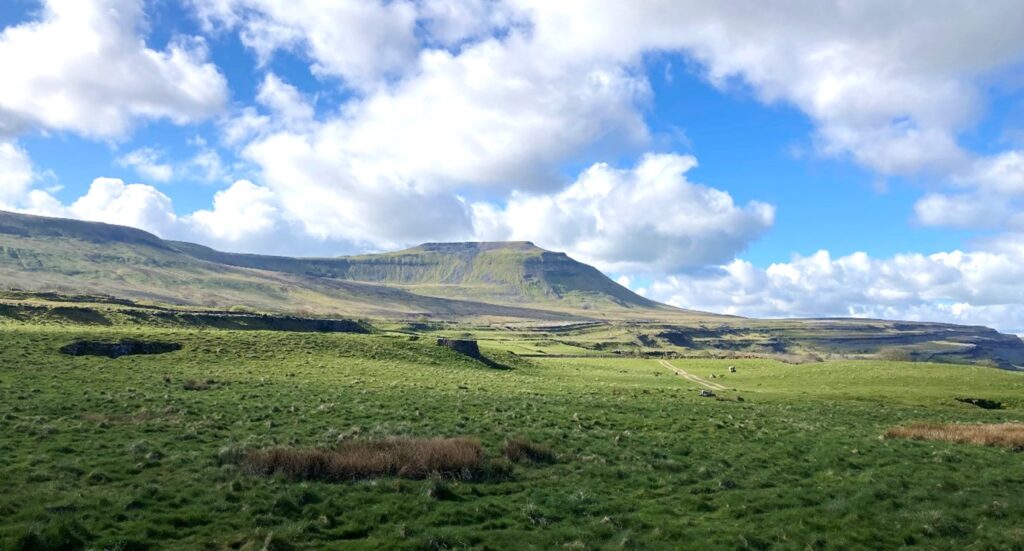
The Wild Ingleborough landscape
Research is a crucial part of our journey. Led by a collaboration between UBoC and the University of Leeds, our studies help us understand how the landscape is changing over time as we restore it and build an evidence base for the benefits of restoration in upland areas. From monitoring flora and fauna to studying soil and hydrology, every piece of research informs our restoration efforts.
Restoring native tree cover is a top priority. With less than 3% coverage at the project’s start, we investigated how existing native trees support woodland expansion through natural colonisation, recording data on tree presence, height, and species across 62 circular plots, each 30 metres wide. Our findings identified sheep grazing, seed source availability, and soil type as limiting factors for natural tree colonisation. Transitioning from sheep to cattle grazing or no grazing has allowed trees to start naturally spreading around the fragments of existing woodland in the landscape. Whilst these findings show natural colonisation has the potential to be a useful method for increasing tree cover, it also highlights the need for tree planting in areas further from seed sources and to restore rarer species.
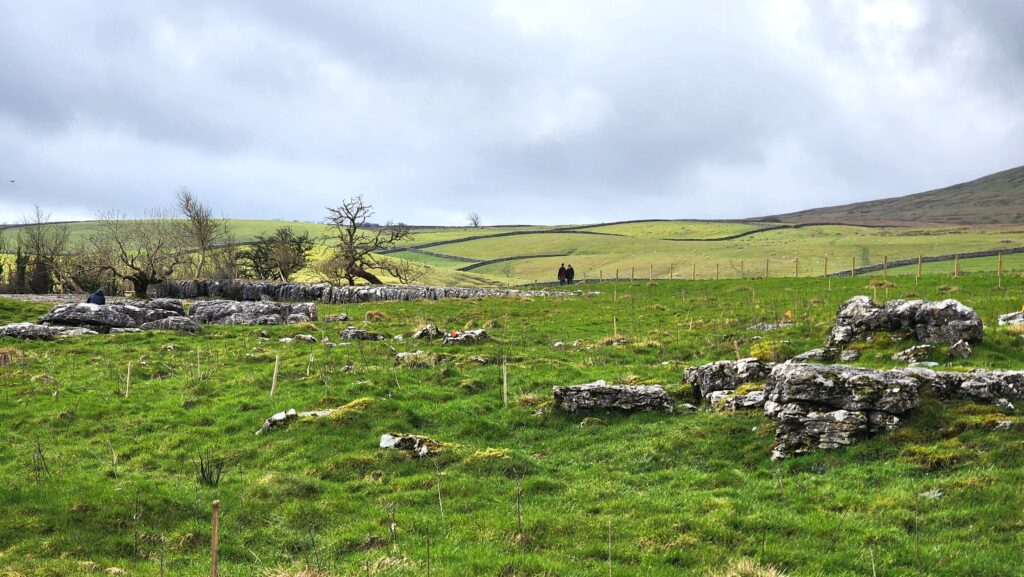
Tree whips, planted by volunteers at Wild Ingleborough
To date, nearly 122,000 native trees have been planted at Wild Ingleborough, with a range of species including oak, rowan and hazel. We’ve been tracking the trees we have planted very closely recording data on 17 different species. Across planting years, we’ve seen an impressive 84% overall survival rate in the first 12 months after planting. At this stage in the monitoring, alder, silver birch, and willow have shown the highest survival rates. Interestingly, even with high browsing rates observed, species like oak, willow, and downy birch still achieved survival rates over 80%.
From this we show that despite high browsing rates, using tree guards isn’t always necessary for ensuring high survival rates in the critical first year post-planting. Skipping the guards not only saves costs but also allows us to use our resources more efficiently across the entire project.
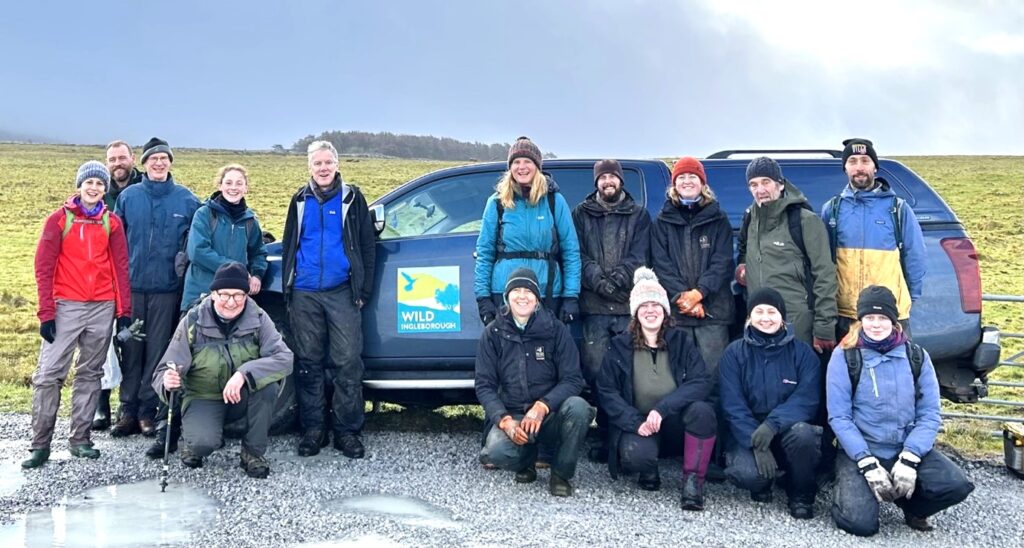
The Wild Ingleborough team and volunteers, ready to work on site.