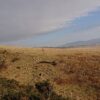
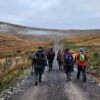
Ingleborough National Nature Reserve (NNR) has become part of the King’s Series of National Nature Reserves and will be expanded to include 1186 hectares of land.
UBoC has been working in Ingleborough to support restoration and research through the Wild Ingleborough program. This month, our staff and trustees have joined celebrations that Yorkshire’s iconic upland landscape will be secured for nature as part of an expanded network of nature reserves, boosting wildlife recovery and public access.
Ingleborough National Nature Reserve (NNR) has habitats that are home to nationally significant wildlife populations including northern brown argus butterfly, curlew and Yorkshire sandwort.
It has been recognised for its importance as a haven for rare wildlife and unique habitats as part of the King’s Series of National Nature Reserves, established to celebrate King Charles III’s coronation in 2023.
The expansion brings Gauber Pasture, Swarth Moor, Salt Lake Quarry, Ashes Pasture, Bellfield’s Pasture, Selside Shaw, and Ashes Shaw into the National Nature Reserve, increasing the total safeguarded area by 179 hectares to 1186 hectares and making it one of the largest and most wildlife-rich landscapes in northern England.

This recognition brings together decades of work in the area by Natural England and Yorkshire Wildlife Trust and five years of the Wild Ingleborough project (a collaboration with Natural England, Yorkshire Wildlife Trust, University of Leeds, The Woodland Trust, WWF, and UBoC) to tackle the climate crisis, restore degraded habitats, and create a resilient landscape for people and nature.
UBoC’s scientific lead at Ingleborough, Professor Dominick Spracklen, said:
“This announcement is fantastic news for nature and testament to decades of hard work of local farmers, Natural England and Yorkshire Wildlife Trust. The expanded National Nature Reserve will help many rare and threatened species to survive.”
Ingleborough NNR is a vital lifeline for threatened species, from delicate ferns, mosses and lichens to flowers so rare that they are endemic to Ingleborough, meaning they can be found in this area of the world alone.
Ingleborough is the only place where you can discover the tiny white stars of Yorkshire sandwort. It’s just one of four places in the UK where you can see Teesdale violets, and one of two places in Yorkshire where purple saxifrage grows.
The site supports nationally important wildlife species including curlew, whose evocative call is fading as populations decline across the UK, as well as the black grouse and ring ouzel – both on the red list of threatened birds.
Ingleborough’s limestone pavements, in their natural, undisturbed state host a rich variety of plant life including rare holly ferns, lichens and mosses, as well as patches of sweet-smelling wild thyme and rockrose, the main food source of the rare northern brown argus butterfly.
 UBoC scientist, Associate Professor Cat Scott, said:
“Our researchers provide detailed monitoring that ensures conservation and management is based on evidence. This is crucial to make sure management changes allow nature to recover.
“Our work has shown how shifting to low-intensity cattle grazing has allowed limestone grassland flowers to recover and has boosted butterfly populations that are declining in many parts of England.”
The reserve is trialling sustainable farming practices with local tenants, including low-intensity cattle grazing with native breed cows that mimic natural processes. Additionally, landowners and reserve staff have been experimenting with different grazing approaches that have helped create a patchwork of different habitats, with areas of wildflower-rich grassland mixed with areas of shrub and woodland.
These practices will now be extended into the new areas of protected land, to allow further reduction in grazing pressure on the limestone pavement.
The extension of Ingleborough National Nature Reserve is a significant moment for nature recovery.
UBoC trustee, Sheila Huntridge, who attended the recent launch event to expand and recognise Ingleborough National Nature Reserve as part of the King’s Series, said:
“The inclusion of Wild Ingleborough within the King’s Series of National Nature Reserves stands as a testament to the deep passion, commitment, and collaborative effort invested in ensuring the success of the Wild Ingleborough project. I found it particularly rewarding to engage with others at the event held on 5 September, sharing insights about their involvement and gaining inspiration regarding the future potential for the National Nature Reserve. Interactions with various partnership representatives and listening to informative talks, all set against the stunning backdrop of the landscape, highlighted the substantial positive impact and ongoing contribution made by the UBoC Research Team of Scientists and partnerships to nature and landscape recovery, which continues to gain momentum and strength.”
UBoC trustee, Jonathan Wild, who also attended the launch event, said:
“The elevation to King’s Series status shows that the Wild Ingleborough partnership is slowly but surely helping nature recover and thrive in this iconic landscape. Crucially, this work will also ensure the landscape is resilient to future climate, economic and policy changes.”