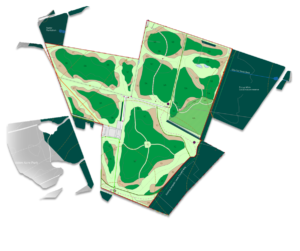
A proposed woodland design
The University of Leeds recently announced a new woodland in the north of Leeds.
Gair Wood will be planted near Eccup Reservoir and the Meanwood Valley Trail in the north of the city between January and March 2023.
The University had a clear set of aims for the project that the UBoC team integrated with the site design. The project had to increase biodiversity and provide benefits for the local community. It also needed to serve as a venue for research and teaching. Finally, it needed to make a contribution to carbon sequestration as part of the University’s ongoing efforts to decarbonise. But how will all of these goals be achieved, and what goes into making a large woodland project like this happen?
When the University decided that they wanted to establish a new woodland for Leeds, they asked the team at UBoC to lead the planning and design. This has turned into a major undertaking with multiple partners across the University and elsewhere. UBoC was able to contribute because of our unique long term partnership with the University. UBoC is a charity dedicated to protecting, planting, and restoring trees and forests. As part of this mission, the multi-disciplinary team has the knowledge and skills to conduct ecological surveys, gather supporting evidence, consult with local stakeholders, produce a full site design, and shepherd it through the planning and approval process.
The result is a design that includes over 60 thousand trees of regionally appropriate broadleaved species such as oak, hazel, and willow planted across a 36-hectare site. Around 15 hectares of new tree planting are added to 4 hectares of existing tree cover, with the remaining space a mix of scrubland, open spaces, and unplanted land near the neighbouring woodland from which local seeds are expected to establish. This transforms grassland into a mosaic of habitats, increasing biodiversity.
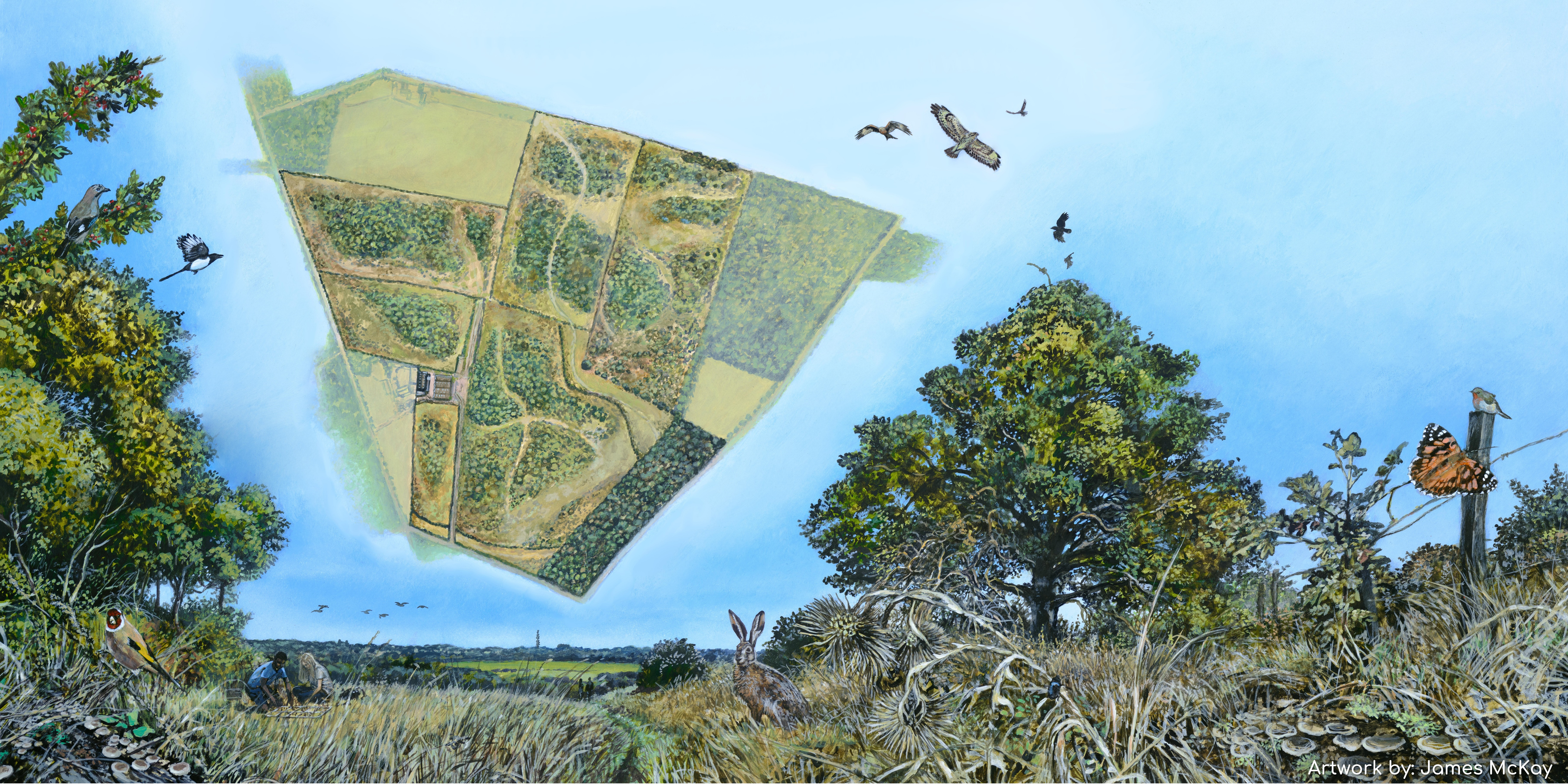
A vision of what Gair Wood might look like in 10-15 years
Research and teaching is also embedded in the design of the site, and the scientific network that UBoC and the LEAF Centre support at the University has allowed expert academics to contribute knowledge to the scheme. An experiment looking at the impact of tree species diversity has been included in the design, as have plans for long term monitoring. The resulting data will show the impact that trees have on biodiversity, soil, and the atmosphere as the woodland matures.
The team at UBoC is excited to see how the project develops over the years. With continuing support from the Leeds academic community, UBoC will continue to provide advice on the maintenance and management of the site. In addition, the team will be coordinating the ongoing research and monitoring, helping to ensure that it becomes an important site for future research into the benefits of tree planting, especially in light of the need to rapidly reach net zero greenhouse gas emissions.
We’ll be posting more news on the project both here and on the dedicated project webpages.
We are now also recruiting volunteers to help with the planting of trees on-site in January and February, so if you’d like to be part of the project you can contact us via info@uboc.co.uk for more info or visit our EventBrite page to book your place directly.